
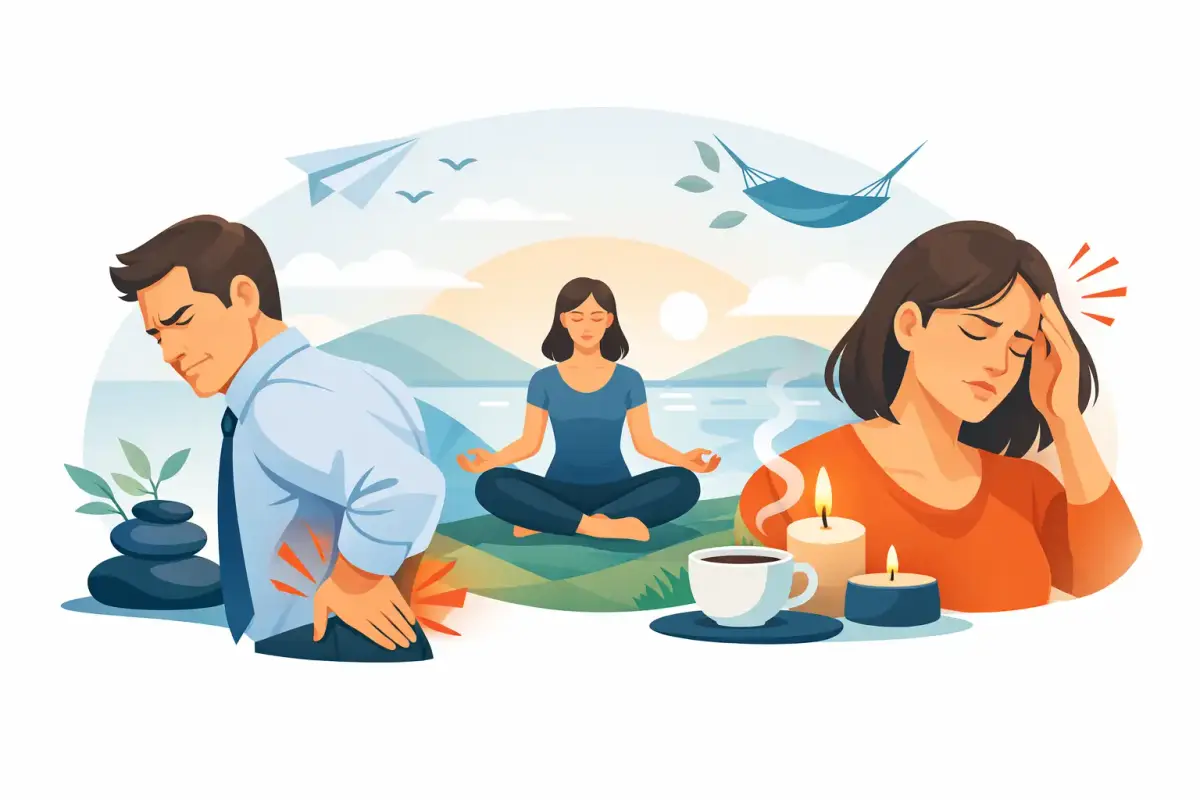
The neck is hard, the jaw is tense, the head continues to work even after work. Many people do not notice stress first in their thoughts, but on the body. Right here put effective Stress Relief Methods AN: You not only create a short distraction, but also help the nervous system to find out from the permanent alarm state.
If you have to work between work, family, appointments and constant accessibility, you don’t need a complicated wellness routine. Methods that realistically fit into a full everyday life and noticeably relieve the body are decisive. Some work within a few minutes, others only unfold their strength by repetition. The best solution is not the most spectacular, but the ones you actually use.
Why Stress Stuck in the Body
Stress is a sensible reaction first. The body provides energy, the attention increases, muscles tense up. It becomes problematic when this situation no longer ends. Then shoulders are pulled up, breathing shallow and regeneration on the track – even at night.
Typical consequences are tension in the neck And back, head pressure, restless sleep, exhaustion or the feeling of not really coming down despite a break. Not every tension is a sign of a serious problem. However, it clearly shows that the body needs a counter-program to the constant performance mode.
An important point: stress reduction does not mean that all stresses have to disappear. It means regaining influence on your own reaction. This can be done through movement, conscious rest, social closeness or a body-oriented application. What suits you best depends on whether your stress is more mental, physical or by both.
Stress reduction methods for everyday life
Breathing: The fastest way out of the boot
A calm, extended exhalation is one of the most direct ways to shut down the body. You don’t need an app or a special place for this. Sit upright, loosen the jaw and inhale for about four seconds. After that, exhale slowly for six to eight seconds. Repeat for two to five minutes.
The effect is often subtle, but that’s why it’s valuable: the pulse can become calmer, the shoulders drop, the stream of thoughts lose pace. If you are prone to dizziness or anxiety, you should not breathe particularly deeply. Quiet and natural is better than maximum.
Movement: voltage needs an output
To hours on the screen If the body is not necessarily tired – it is often motionless and tense at the same time. A brisk walk, climbing stairs, easy cycling or ten minutes of mobilization can relieve this tension better than scrolling further on the sofa.
Movement that does not generate any additional pressure to perform is particularly effective. You don’t have to fulfill a training plan. Get off the bus earlier, take a short tour between two sessions, or consciously move your shoulders, thoracic spine and hips. Regularity beats intensity.
Muscle relaxation: give the body a clear signal
Many people only notice when they consciously let go of how much strength they permanently give in their hands, stomachs or shoulders. With progressive muscle relaxation, you tense individual muscle groups for a few seconds and then let go again. Start with your hands, walk over your shoulders and face and end with your legs.
The procedure is well suited for people who become impatient when meditating or are even more concerned about pure silence. Something is actively happening here. At the same time, they learn to perceive the difference between tension and relaxation more clearly.
Stimulus breaks: don’t fill every free minute
The nervous system does not recover automatically just because no work appointment is running. If messages, podcasts and social media follow immediately on e-mails, the head remains in permanent reception. Small, less irritated islands in the day are therefore not luxury, but a concrete recreational practice.
Leave the cell phone out of reach when you eat. Drink a coffee without reading the side. Go out in the fresh air for five minutes without headphones. These breaks seem inconspicuous, but help to interrupt the permanent inner acceleration.
Sleep Routine: Regeneration starts before falling asleep
Sleep problems have many causes, but an overactive evening is a common amplifier. Anyone who works up to the last minute, trains or consumes messages, takes the tension to bed with them. A reliable transition phase of 20 to 30 minutes can change a lot.
Dim light and pace, get organizational thoughts earlier in the evening and choose a recurring ritual: showering, reading, stretching gently or breathing calmly. It’s not about perfection. A short, repeated routine also gives the body orientation.
When relaxation alone is not enough
Sometimes it’s not enough to do a breathing exercise because the physical tension is already deep. Anyone who regularly wakes up with a hardened neck, aching shoulders, a tense back or inner restlessness should involve the body in a targeted manner. Here massages, heat, movement therapy or other body-oriented applications come into question.
Which method makes sense depends on the symptoms and personal preferences. Some people like manual touch, others don’t want to undress or want to be as short as possible. Time is also a real decision-making factor: a good relaxation method that never takes place because of its effort hardly helps in everyday life.
In Zurich, Wundermassage offers a non-contact, clad application with electromagnetic impulses that is geared towards full-body relaxation and regeneration. For people on a tight schedule, a short session from 10 to 20 minutes will be an interesting addition to exercise, sleep routines and conscious breaks. In the case of acute, severe, new or unclear pain, however, the medical clarification always belongs first.
What makes stress relief methods effective
The most common trap is: want to change everything at once. Meditate every morning, do sports every day, eat perfectly, sleep early and switch off completely at the weekend – that sounds motivating, but quickly creates new pressure. A small combination that suits your life is better.
For example, choose an immediate measure for hectic moments, about two minutes of calm breathing. Complete a physical habit like a daily walk. And create a fixed regeneration date once a week, which is really good for you. In this way, relaxation does not become a further task on the list, but a reliable part of your day.
Also pay attention to your personal stress booster. For some, it is the full calendar, for others conflicts, too little movement, constant multitasking or the aspiration to always be available. A method can relieve symptoms. It gets easier in the long term if you also set limits where the load is created.
When professional support makes sense
Persistent tension is not a character flaw and also not proof that you just need to organize yourself better. If sleep, mood, concentration or physical ailments suffer for weeks, support can be added. General practitioner, psychological or psychotherapeutic help can be particularly important if anxiety, depression, panic, severe pain or the feeling of being overwhelmed increase.
Physical relaxation and professional support are not mutually exclusive. On the contrary: If you sleep better again, breathe more freely and wear less tension, you often create a better basis for tackling changes in everyday life.
The first step doesn’t have to be big. Maybe today it’s a ten-minute walk without a cell phone, three calm breaths before the next appointment or a deliberately planned moment when your body doesn’t have to do anything. Real recovery can arise from such short interruptions.
The suitability is discussed individually before use. Results can vary. Miracle massage does not replace a medical diagnosis or prescribed treatment. The application is not carried out during pregnancy. Miracle Massage · Zurich