In the evening the socks are pressing, the ankles are heavy, the neck is hard and the body doesn’t feel refreshed despite the rest. Many people then look for oneLymphatic drainage without direct contact– Especially if you are uncomfortable with classic massages, you don’t have time for long appointments or want to experience a fully dressed treatment. The crucial question, however, is: What can a non-contact application actually do – and when is it necessary for medical clarification?
What lymphatic drainage means medically
Manual lymph drainage is a specific therapeutic technique. Specially trained specialists work with slow, gentle grips on the skin to support the drainage of lymph fluid. It is used in particular in diagnosed lymphedema, after certain operations or for further medically clarified swellings.
This is different than any application that is intended to promote relaxation, blood circulation or a lighter body feeling in general. Anyone who has real lymphedema or suddenly notices a significant swelling should not rely on self-diagnoses. A non-contact wellness or regeneration application does not replace a medically prescribed decongestion therapy.
This distinction creates clarity – and it protects against false expectations. Not every heaviness in the legs is a lymph problem. Sitting for a long time, little exercise, muscle tension, stress, heat or a demanding everyday work often play a role. This is exactly where a non-invasive approach to relaxation can be of interest to many people.
Lymphatic drainage without direct contact: what is possible?
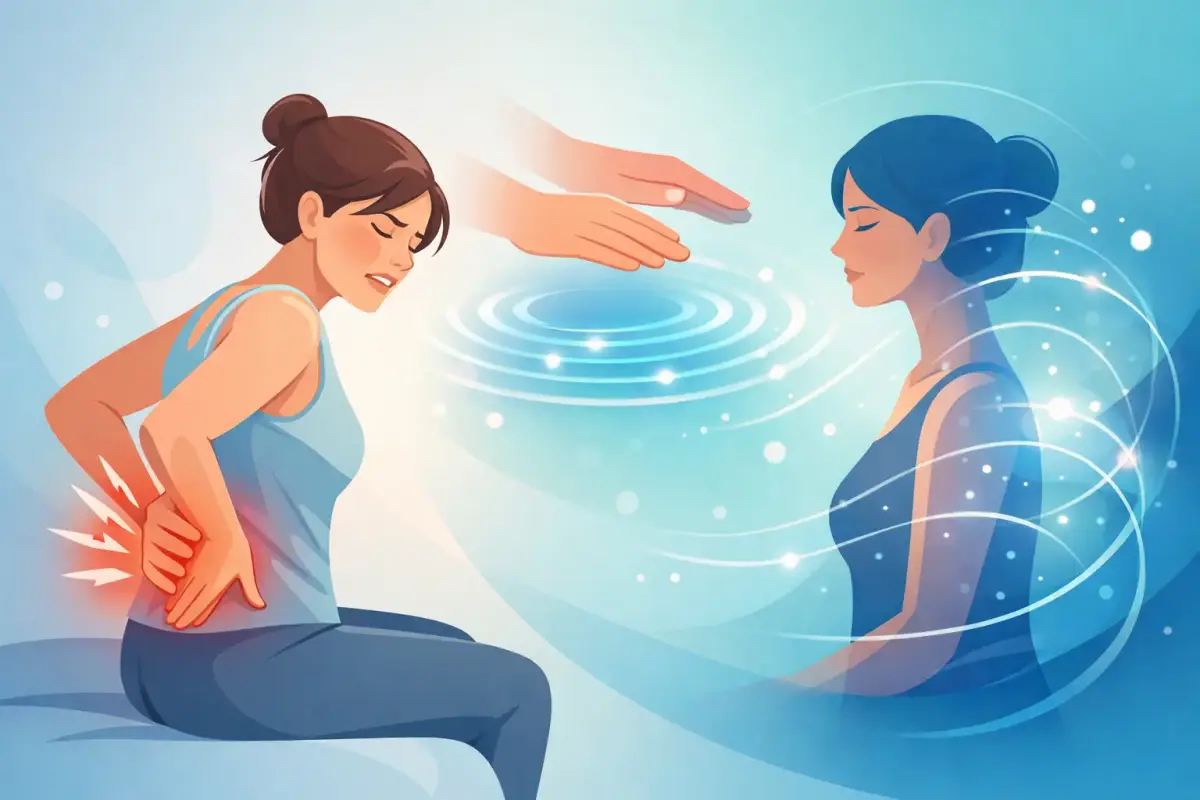
In non-contact applications, hands are not used on tissue or lymphatic membranes. Instead, depending on the method, technical stimuli, such as electromagnetic impulses, are used. The goal is not to imitate manual lymphatic drainage, but to give the body an impulse to relax and to support subjective well-being.
People often report a warm, relaxed or lighter feeling after such sessions. In the case of tension, this can be particularly pleasant: the body does not have to go through intense pressure or painful grips to let go. Anyone who finds touch unpleasant, experiences a lot of physical closeness in everyday life or simply wants to switch off quickly will find a comfortable alternative.
However, the benefit depends heavily on the starting point. In the case of stress-related tension, heavy legs after a long day at the office or muscular overload, a short relaxation unit can be useful. In the case of disease-related edema, inflammation or vascular problems, on the other hand, medical diagnostics and, if necessary, targeted therapy are required.
not be touched – and still consciously regenerate
The big difference is in the experience. With a classic massage, you usually have to change your clothes, lie on a couch and allow direct contact. This is pleasant for many, but not for everyone. Some want to keep their clothes on, not have oils on their skin and not plan a long appointment.
A non-contact application can be a pragmatic solution here. It is aimed at people who come to rest in 10 to 20 minutes, reduce tension and give their body a break. Regularity often counts, especially for neck, back and shoulder problems that build up over weeks in everyday work. A short application that actually fits into the calendar is used more than an appointment that requires a lot of planning every time.
For whom can a non-contact application fit?
It can be a good option if the focus is on the desire for relaxation and physical relief. This applies to people with sedentary work as well as people who do a lot in sales, crafts, care or sports. Even those who have the feeling after a long drive, a hectic day or bad sleep that the whole body is under tension often don’t look for complicated treatment – but a noticeable break.
Wundermassage in Zurich relies on a patented, non-contact technology with electromagnetic impulses. The application is fully clothed and is designed for short, everyday sessions. This can be attractive for people who have tried classic massage and want to get to know a different form of regeneration.
A realistic attitude is important: a single session is not a promise that long-term complaints will disappear. Some experience significant relaxation after a short time, others rather benefit from repeated applications and accompanying changes in everyday life. Exercise, sufficient sleep, breaks and, if necessary, medical or physiotherapeutic support remain important building blocks.
When you should not treat swelling yourself
Heavy legs or slight pressure points after a hot day are not automatically an emergency. However, there are complaints where contactless use should not be the first step. Have these symptoms medically clarified in a timely manner:
- Suddenly occurring, one-sided swelling of the leg or arm
- Pain, redness or severe overheating of a swollen area
- Shortness of breath, breast pain or a pronounced feeling of illness
- Swelling after cancer treatment, surgery or radiation
- Persistent or increasingly strong water retention without recognizable cause
Prior medical consultation is also useful for heart, kidney or vascular diseases, acute inflammation, known thrombosis or pregnancy. This is not an obstacle to wellness and regeneration. It is the basis for treating your body responsibly.
What to Expect from a Session
The best expectation is concrete: You deliberately take your time, stay attracted and give the body a brief stimulus to rest. Many people find this pleasant because no manual kneading, no pressure on painful points and no changing rooms are necessary. Instead, the focus is on the experience of relaxation.
This can be particularly valuable if tension has already become permanent. A tense back changes the posture. Poor sleep reduces resilience. Stress makes the shoulders pull up and breathing flatter. A short break does not solve every cause, but can create the moment when the body finds out from this permanent alarm.
If you test a non-contact method, you should pay attention to simple signals after the session: Do I feel calmer? Do the neck and shoulders go easier? Am I sleeping better? Can I move more freely? Such observations are more meaningful than big promises. If you don’t notice any effect, that’s also helpful information.
Classify touchless regeneration in a meaningful way
The term lymphatic drainage is often used very widely in everyday life. Medically it is clearly defined. In the wellness area, he often stands for the need for lightness, relaxation and relief. Whoever tells the two apart can make a smarter decision.
In the case of a medically confirmed lymph disease, the treatment belongs in expert hands. In the case of stress, muscular tension and the desire for a quick, pleasant regeneration break, a touchless application can be a modern addition. It requires no overcoming, no direct contact and no long block of time.
Your body doesn’t have to be completely exhausted before you pay attention to it. When short moments of relaxation can be integrated more easily into your everyday life, they often become a habit – and it is precisely this habit that can feel noticeably better in the long term.
The suitability is discussed individually before use. Results can vary. Miracle massage does not replace a medical diagnosis or prescribed treatment. The application is not carried out during pregnancy.Miracle Massage · Zurich